
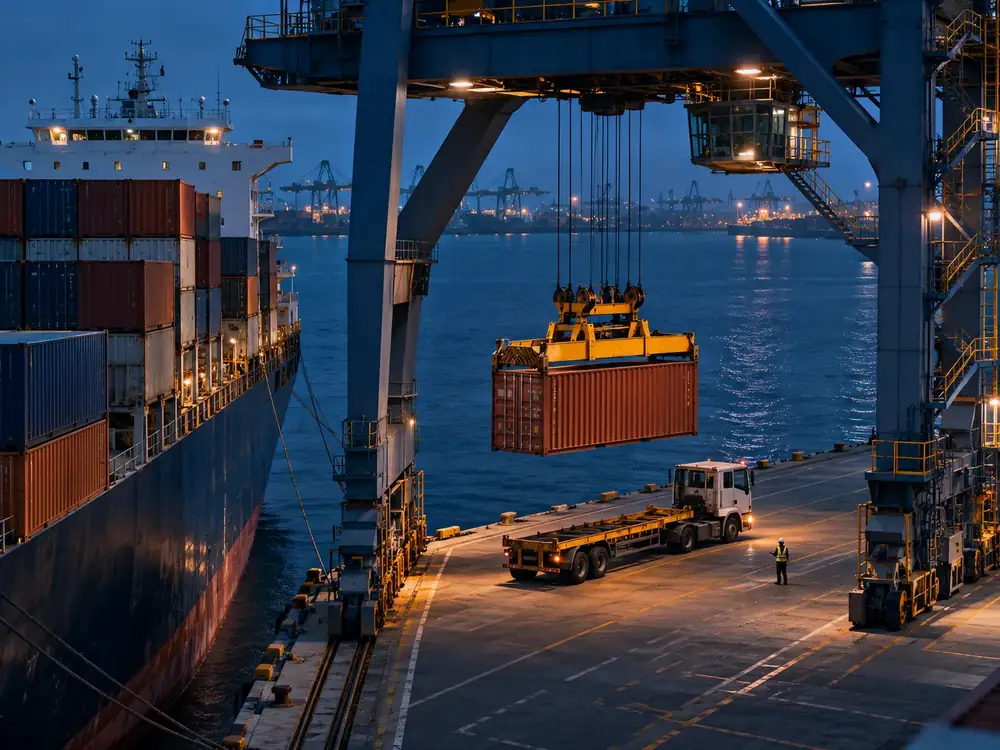
Transit and transshipment are important concepts in international logistics. Both can be part of the same supply chain, but they describe different aspects of a shipment's journey. Understanding the distinction helps businesses plan routes, documents, handovers and costs.
What is customs transit?
Customs transit is the movement of goods under customs control from one customs office to another. It can allow goods to pass through a territory without being entered for domestic consumption at every point along the route. It does not mean that a shipment can never stop or change vehicles.
Goods remain subject to the applicable transit procedure, documentation, seals or guarantees until that procedure is discharged. The specific requirements depend on the jurisdictions and arrangements involved.
Domestic transit: movement between customs offices within one country, for example from a seaport customs office to an inland office.
International transit: movement involving more than one customs territory, under the applicable national or international arrangements.
What is transshipment?
Transshipment is the transfer of goods from an incoming means of transport to an outgoing means of transport under customs control. In maritime logistics, a container may be discharged from one vessel at a hub port and loaded onto another vessel for the next leg.
It may be used when a direct service is unavailable, when a hub connection offers a suitable route or when transport schedules and capacity make an intermediate transfer practical. The handling, documentation and customs requirements must be assessed for the location concerned.
The key differences
Transit concerns the customs-controlled movement between offices or through a territory. Transshipment concerns the physical transfer between means of transport. Neither term, by itself, determines whether ownership changes.
A shipment can therefore move under a transit procedure and also undergo transshipment during its journey. The concepts are related, rather than mutually exclusive alternatives.
There is no universal rule that transit is always cheaper or faster. Cost and time depend on the route, distance, waiting time, number of transfers, handling charges and applicable customs requirements.
Their role in international trade
Transit corridors connect ports, inland markets and neighbouring countries. Transshipment hubs connect shipping services and can make destinations accessible through a wider network. Both support international supply chains.
When comparing transport statistics, distinguish physical cargo volumes from trade values and passenger figures. Statistics should be linked to a clearly identified period and source before being used for a business decision.
Benefits and practical limitations
Transit can support efficient cross-border routing and avoid repeated domestic import clearance where the relevant procedure permits. It also requires coordination between customs offices, carriers and other parties, and compliance with the applicable guarantees and controls.
Transshipment can provide access to more destinations and services. Depending on the route, it may improve transport options or costs, but it can also introduce handling charges, connection waiting time and additional coordination.
The appropriate arrangement depends on the goods, value, origin and destination, available services, delivery schedule and legal requirements. Any route must comply with applicable import, export and transit controls.
Frequently asked questions
When is transit used?
When goods need to move under customs control between offices or through a customs territory before the relevant final procedure is completed.
When is transshipment used?
When goods must transfer between transport services, for example between vessels at a hub port, to continue to their destination.
Can the same shipment involve both?
Yes. A customs transit movement may include a transfer of transport. The requirements of both the customs procedure and the handling operation must be respected.
Reference: World Customs Organization: customs transit and transshipment.