
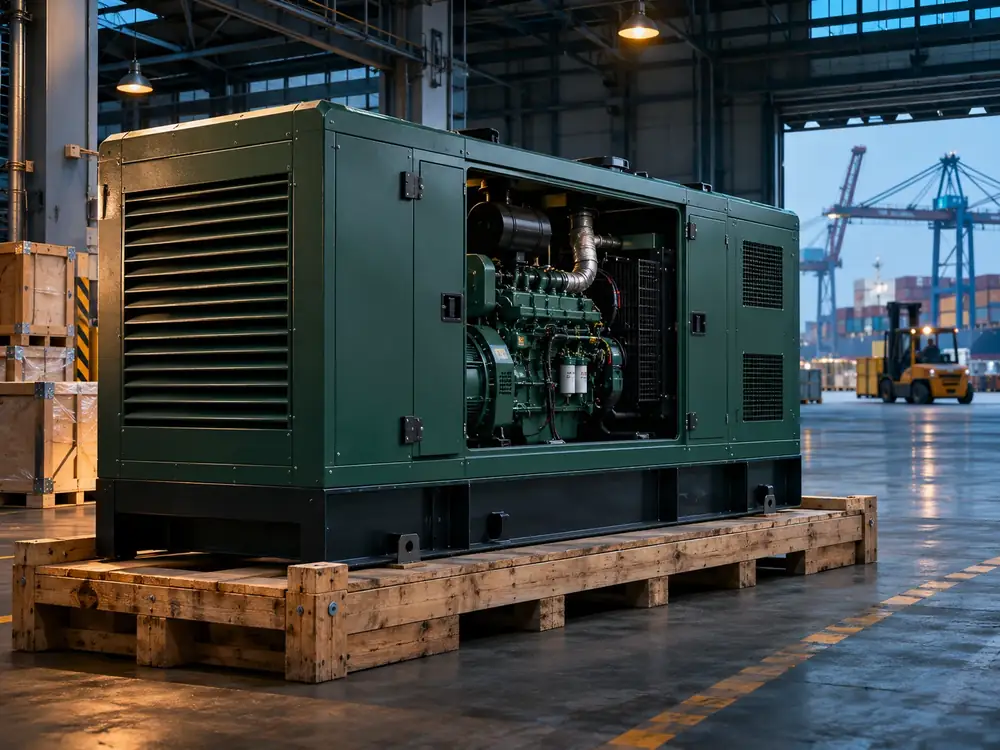
How is a generator cleared through customs?
Generator clearance involves several stages, from arrival at customs to release from the bonded warehouse. Generators are often heavy, high-value capital equipment, so their documents and specifications require careful review.
1. Arrival and warehouse receipt
The carrier delivers the shipment to customs, the cargo details are recorded and a warehouse receipt is issued. The receipt confirms arrival and forms part of the clearance record.
2. Preparing the documents
The owner or broker prepares the required documents, which may include:
- Commercial card and import order registration.
- Pro forma invoice and commercial invoice.
- Packing list and transport document.
- Certificate of origin and cargo insurance.
- Generator catalogue and technical specifications.
Important technical details include the engine and alternator brands, output in kVA, model, country of manufacture and whether the equipment is new or used.
3. Customs declaration
The broker records the goods type, quantity, weight, value, manufacturing country and HS code. Generating sets are commonly associated with heading 8502, while the precise classification depends on the unit's type and specifications.
4. Customs routing
After submission, customs determines the inspection route:
- Green: fewer checks and potentially quicker clearance.
- Yellow: document review.
- Red: document review and physical inspection.
High-value industrial equipment may be subject to detailed examination.
5. Physical assessment
Where required, an officer checks the equipment against the records, including model, serial number, power rating, brand, accessories and new or used condition. Separate components, such as the engine, control panel and accessories, must also match the documents.
6. Calculating and paying charges
Clearance costs can include:
- Import duties.
- Applicable taxes and statutory charges.
- Storage.
- Loading and unloading.
- Inspection or expert assessment.
- Domestic transport.
- Customs broker fees.
7. Required approvals
Depending on the generator, technical standards, permits for special equipment or import records may need review. Used generators may receive additional scrutiny.
8. Release authorisation
Once documents are accepted, applicable charges paid, assessment completed and customs approval obtained, the release permit is issued and the generator can leave customs storage.
Common difficulties
- Incorrect tariff classification.
- A discrepancy between declared and accepted value.
- Incomplete technical records.
- A model that does not match the invoice.
- Lengthy assessment.
- High storage costs while the equipment is held.
Before the equipment arrives
For large generators, such as units rated at several hundred kVA or more, review classification, approvals and estimated clearance costs before arrival. Time spent waiting at customs can create substantial storage and delay charges.